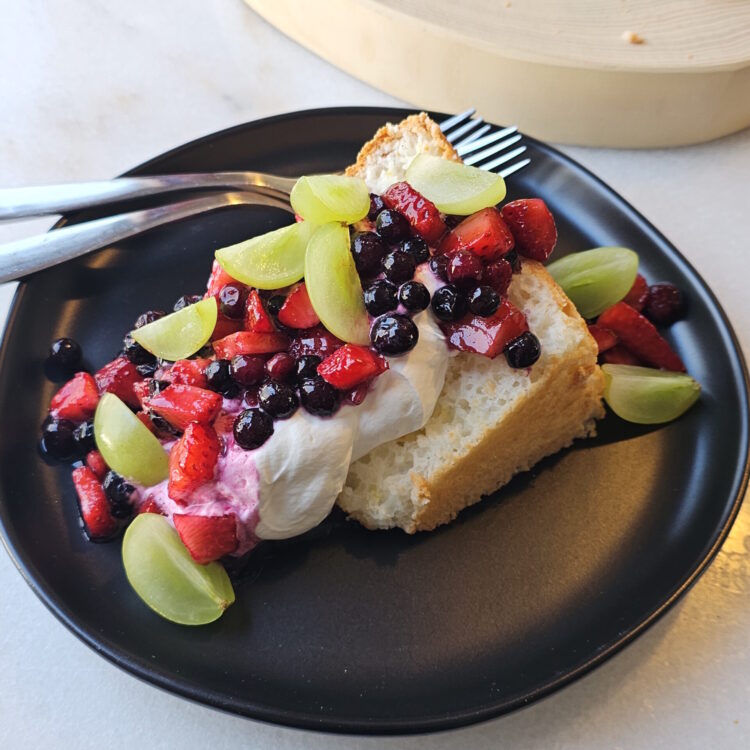
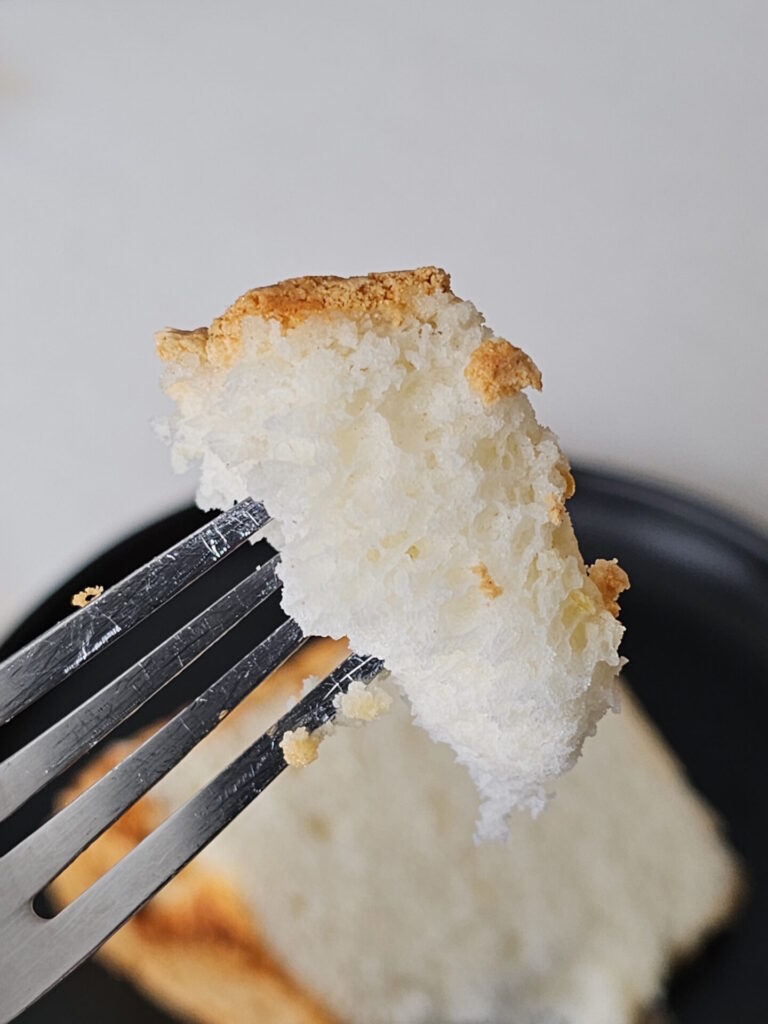
This perfect Homemade Angel Food Cake recipe is my love letter to anyone who has struggled with making this seemingly impossible cake at home. Although many sources will assert that you can only make angel food cake with freshly separated egg whites, I’m here to tell you otherwise. You don’t need to sacrifice 12 egg yolks to get the whites you need to make this cake. In this recipe, I’ll show you how to crack the structure code and successfully use liquid egg whites. No more waste in the kitchen!
This is a slightly more technical cake, but when you follow the 3:3:1 ratios of egg whites to sugar to cake flour, and add a few everyday ingredients to stabilize the egg whites, you can achieve a truly divine, light-as-a cloud cake. All you need is an angel food pan, a few key ingredients, a basic understanding of what makes angel food cake work, and a little faith.
Ready to get started?
Jump to RecipeTable of Contents
Angel Food Cake: Unpacking the Mystery and a Few Good Memories
Shortly before my mother passed away in 2021, I inherited her angel food cake pan. I don’t remember her making angel food cake when I was growing up, but that doesn’t mean she didn’t. It’s possible she attempted this elusive cake but never enjoyed the pleasure of that moment of personal pride when you know the cake turned out perfectly.
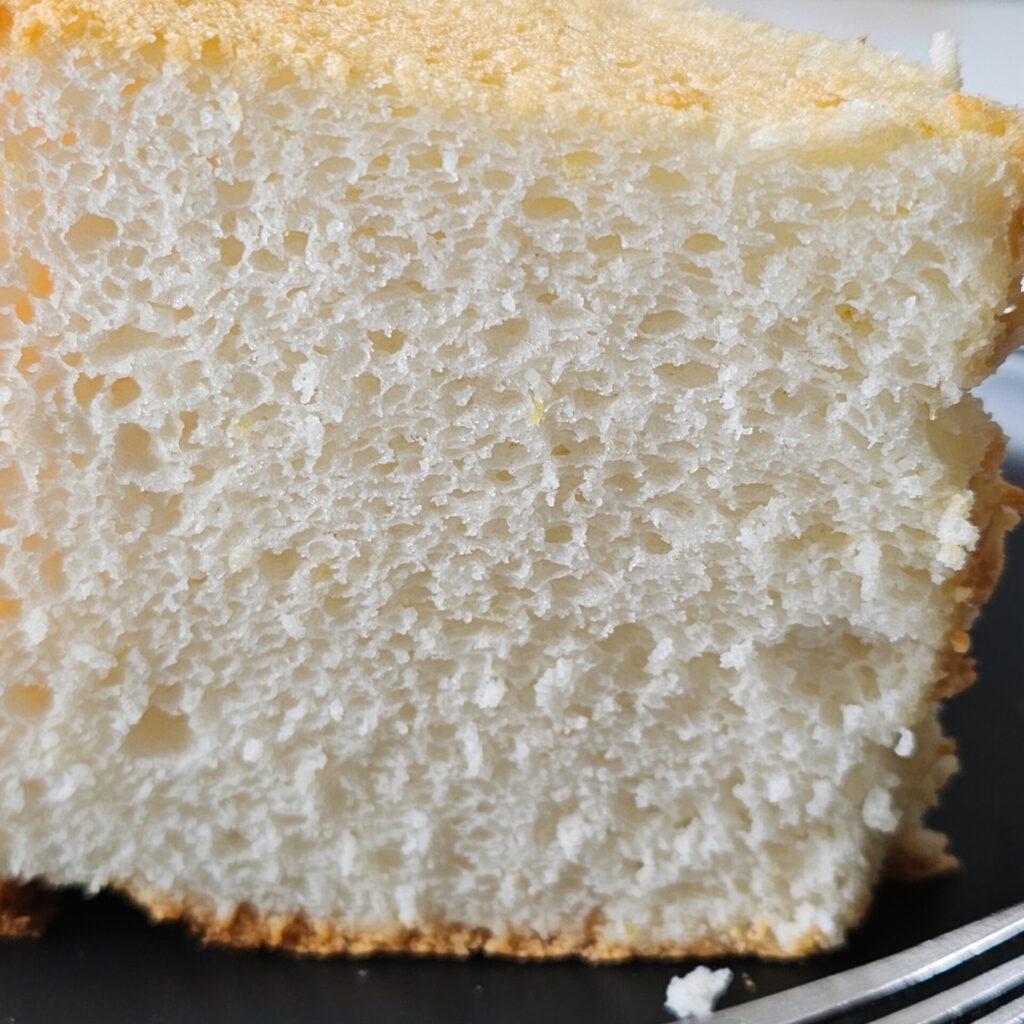
This nostalgic cake is still one of my favorite summer desserts. As a kid, I remember eating angel food cake with macerated berries and whipped cream, but honestly, I was perfectly content with just a slice by itself. I can picture the cake pan in her baking cupboard, but I don’t recall her ever making one, so imagine my surprise when she gifted me her cake pan nearly 40 years later.
I have no idea why she held on to that cake pan for as long as she did. When I inherited the pan, it found its place in the back of my baking cupboard, and there it remained until it started to call to me every time I opened that cupboard door. “Not yet, but soon.” This is what I would whisper back to it whenever I went digging for a different cake pan, and it would settle back into its quietness and patiently wait for the day when I would endeavor to make an angel food cake. Like other memories and items that get boxed up and pushed aside when someone passes, I chose my moment to revisit it.
Perhaps she left it to me because she knew I liked a good challenge or that I would enjoy the process. Maybe she was just getting rid of things she no longer needed. Whatever the reason, or for no reason at all, cracking the code on how to make a good, waste-free, angel food cake occupied my weekends during the long, winter months, and conjured up a few good memories.
Cracking the Angel Food Cake Code
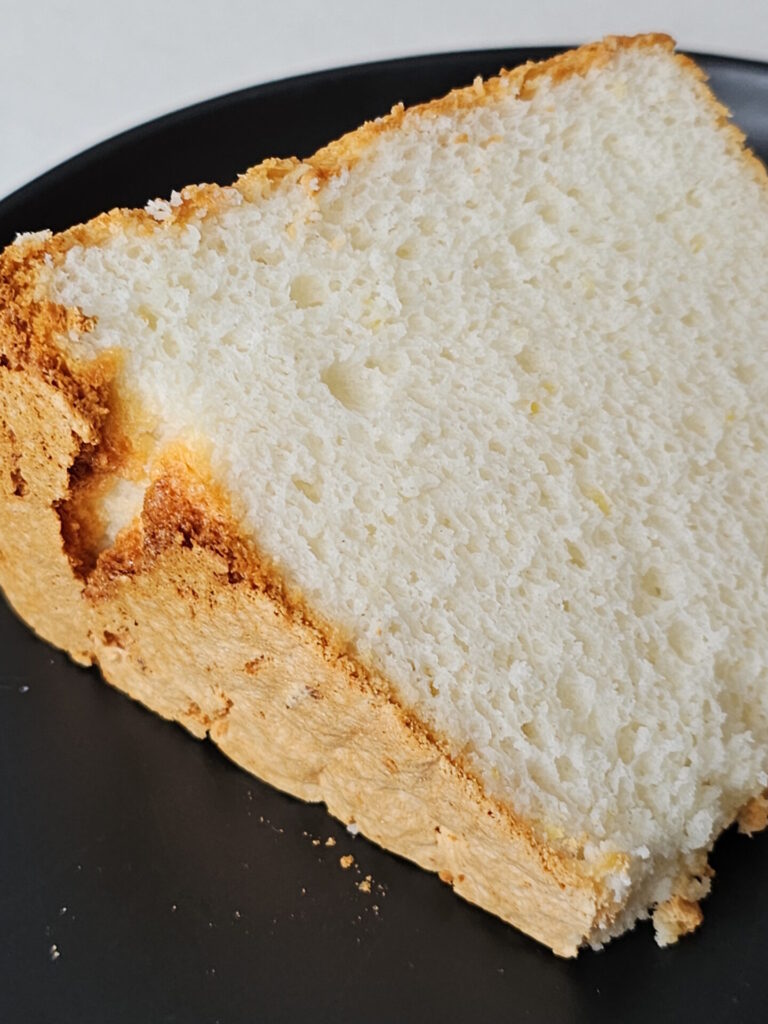
Nothing about angel food cake should work. Traditionally, there’s no fat, no leavening except for the air trapped in the egg whites, and there’s hardly any flour to provide structure. It simply shouldn’t work, which is why when many foodies (myself included) have attempted to make this cake at home it ends up sunken in the middle, dense, or wet – not the light, airy, pillow of sweetness it’s supposed to be. For many home bakers – myself included – it’s a bit of a white whale dessert.
If you’ve ever asked the question, “Can I use liquid egg whites for angel food cake?”, you likely were told it’s not possible. Most professional bakers will tell you that there are some non-negotiable rules to successfully making an angel food cake, and I don’t disagree, but I’ve learned there are some that can be bent a little, too.
Old, Non-Negotiable Rules for Success
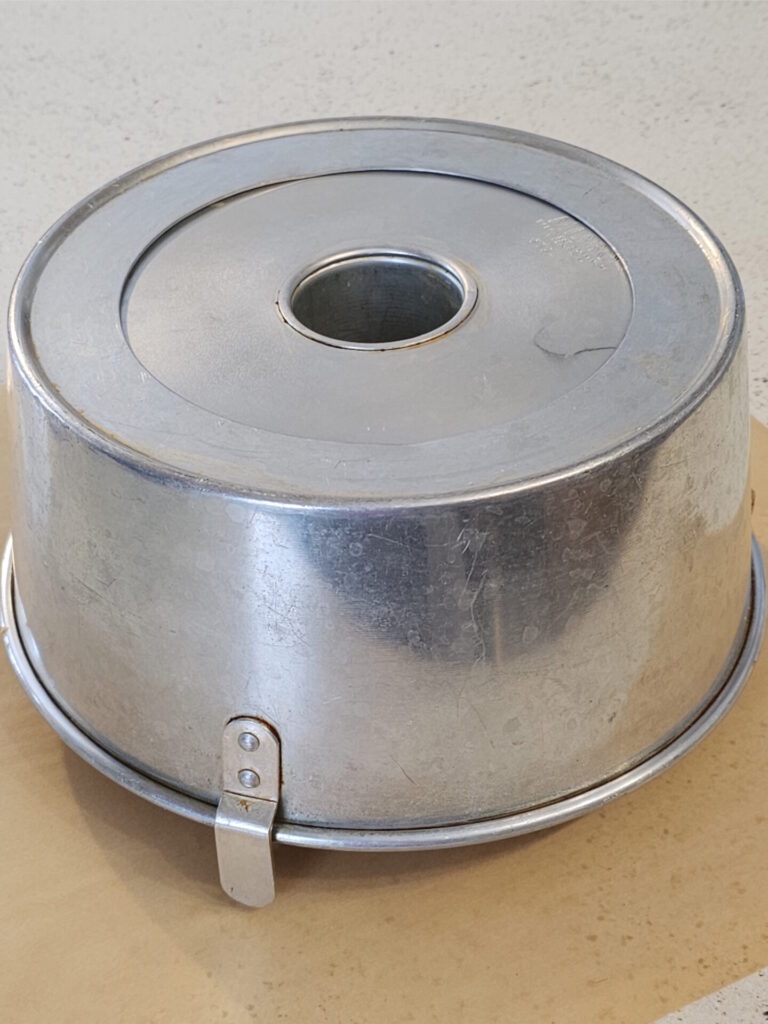
- Always use an Angel Food Cake Pan. Yep, you need to use a cake pan specifically designed for angel food cake. A bundt pan or a regular cake pan simply won’t provide the height or structural support in the center of the pan that this cake needs to hold onto in order to rise properly while baking.
- Never grease the pan and never use a nonstick pan. If you ever come across a non-stick angel food pan, don’t waste your money. One key rule for a successful rise is to allow the cake to stick to the sides of the pan as it bakes. This provides the surface area that the cake needs to achieve its signature height, and light, airy texture. By greasing the pan or using a nonstick pan, you are inhibiting the cake’s ability to rise properly and reach its full, fluffy potential. Trust me when I say that the cake will come away from the pan easily after it’s had a chance to cool.
- Always cool the cake upside down. As soon as you take the cake out of the oven, it’s essential to invert it and allow it to cool upside down. An angel food cake pan is equipped with feet at the top of the pan that will elevate the cake and allow air to circulate underneath as it is cooling. Cooling the cake upside down helps prevent collapsing and assures your cake retains its shape.
- Always clean your bowl and whisk with lemon juice before whipping the egg whites. Use a little lemon juice on a clean paper towel to wipe your mixing bowl and whisk attachment clean before adding the egg whites. This ensures there is no fat or detergent residue on your utensils that could keep your egg whites to whipping properly. For good measure, I like to also wipe down the sides of the cake pan with lemon juice. It’s not necessary, but still helpful.
- Allow the egg whites to come to room temperature (approx. 70 degrees F.) before whipping. The proteins in room temperature egg whites are more “flexible” than cold egg whites – allowing them to whip up bigger and fluffier. Room temperature egg whites will achieve a higher volume when whipped.
However, with this recipe, I’ve cracked the code on one major rule – the old standard that you can only use the whites of freshly-cracked eggs. Because I hate wasting ingredients, I took it as a personal challenge to find a way to make a perfectly light angel food cake using liquid egg whites.
A large egg white is made up of approximately 90% water and 10% proteins. The water to protein percentages of liquid egg whites (the kind you find in a carton) can vary. Additionally, liquid egg whites are pasteurized. This is great for preventing bacteria and food-born illnesses, but it alters the egg whites’ ability to foam, whip, and maintain their volume. Because this cake doesn’t use baking powder or fat to support the structure – relying only on air – maximum egg white volume is essential for making angel food cake.
New Rules for Success
In this recipe, we get around the fresh egg whites rule by adding a few common stabilizers at two key stages of the batter. We also get a bit technical with our measurements. The result is a more stable, perfectly light angel food cake.
- Accurate ratios produce consistent results. Although typically not the American way of baking, I broke out the kitchen scale for this recipe and measured three key ingredients in grams for the sake of consistency. When the egg whites, sugar, and flour ratios are measured out to 3:3:1, we get a consistent result. Use a kitchen scale to measure these ingredients and stick to the ratios of 3 parts egg whites, 3 parts super-fine baker’s sugar, and 1 part cake flour.
- Use baker’s sugar and cake flour. Baker’s sugar is finer than regular granulated sugar, so it absorbs more quickly into the egg whites. This helps stabilize the whipped whites. Additionally, cake flour is lighter than All Purpose flour, has less gluten, and is milled finer than regular AP flour. This contributes to a finer crumb and lighter texture. Using these two finer-milled ingredients helps support the egg whites instead of weighing them down.
- Add corn starch to the flour mixture. The addition of a little corn starch helps to absorb the added moisture of the liquid egg whites, further lightens the flour mixture, and provides additional structure to the cake as it is baking.
- Use cream of tartar and lemon juice when whipping whites. Most traditional recipes call for using cream of tartar to stabilize the egg whites when they are whipping. We do the same in this recipe; however, we take it a step further by foregoing traditional flavorings of vanilla and almond (which can have oils that can work against the egg whites, and use lemon juice instead to further support the structure of the whipped whites. The lemon juice also adds a nice, bright flavor to this cake which helps offset the sweetness of the sugar.
- Don’t overwork your batter when folding in the flour mixture. In this recipe, I recommend sifting the flour mixture a total of three times and adding it to the egg whites in four separate batches. Don’t worry if the flour isn’t completely incorporated between each addition. As you continue to mix, the batter will come together and any remaining pockets of flour will get distributed. Don’t be tempted to over-mix the batter. The goal is to retain as much air as possible in the whites.
- Put that cake in the oven and leave it alone. Although it’s tempting to want to check in on this cake, resist the urge to open the door until the very end. Angel food cake is not a souffle, but sudden shifts in temperature can impact the rise or even cause it to fall. Wait until the very end of the baking cycle to check if it’s done.
You may be looking at this recipe and thinking this is more fuss than it’s worth, but when you measure out your ingredients and read the recipe through from start to finish in advance to get a feel for the flow of things, it goes quite smoothly and quickly. This cake batter comes together in less than 20 minutes, and bakes in slightly under one hour, but it does need a solid two hours to cool – upside down. If I’m serving this cake for dessert, I like to make it the night before, allow it to cool on the counter while I’m sleeping, and remove it from its cake pan first thing in the morning.
I’m not one for hyperbole, so you won’t catch me saying it’s the best angel food cake recipe in the world, but I wouldn’t post it here if it wasn’t worth keeping on repeat.
Let’s Get Social.
Thank you for visiting MOstly Bakes! I hope you have enjoyed reading about the story behind this homemade angel food cake recipe and give it a try. It’s a little work, but well worth the technical effort. It’s also quite lovely with this Easy 20-Minute Thyme Infused Blueberry Sauce recipe. For more delicious recipes and creative baking ideas, subscribe to our newsletter and follow us on social media via Instagram, Facebook and Pinterest. Thank you again, for visiting and I look forward to connecting with you there!
Perfect Homemade Angel Food Cake
Course: All Recipes, DessertsCuisine: DessertDifficulty: Intermediate10
servings20
minutes55
minutes2
hoursAll you need is an angel food pan, a few key ingredients, a basic understanding of what makes angel food cake work, and a little faith to make this truly divine, light-as-a cloud cake.
Ingredients
152 grams cake flour
454 grams superfine baker’s sugar, divided
1 Tbsp. corn starch
zest of one lemon
454 grams liquid egg whites, room temperature
1/2 tsp. fine table salt
1 1/2 tsp. cream of tartar
2 tsp. fresh lemon juice, plus more for cleaning the bowl and whisk
Directions
- Preheat oven to 350 degrees F. Have an untreated 9-inch or 10-inch angel food cake pan ready and off to the side.
- For the flour mixture
- In a small bowl, sift together the cake flour, half of the sugar and the corn starch. Sift a second time and set aside, but keep the sieve handy so you can use it to sift the third and final time directly into the egg white mixture later. Set aside.
- For the egg white mixture
- Using a clean paper towel, prepare a large mixing bowl and whisk attachments by wiping them down with lemon juice.
- Add the liquid egg whites to the bowl and begin to whisk on medium speed until just frothy – approximately 1 minute.
- Add the cream of tartar, salt, and lemon juice to the egg whites and increase the speed to high.
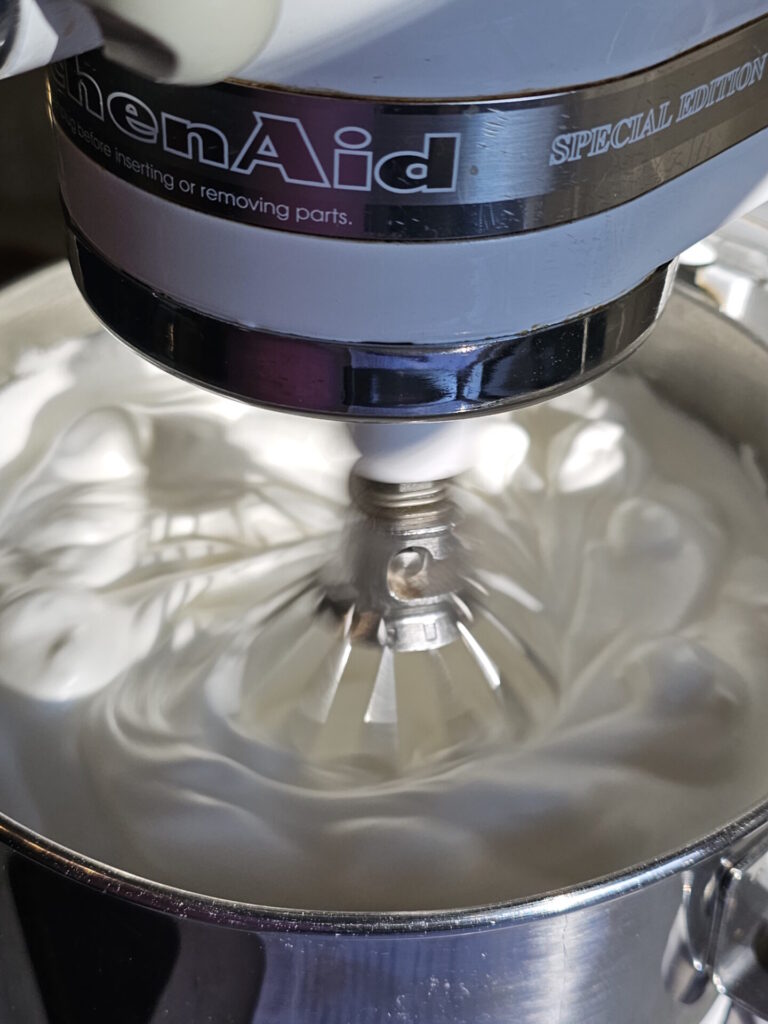
- Gradually add the remaining half of the sugar to the egg white mixture and continue to whip on high until soft peaks form – approximately 2 minutes.
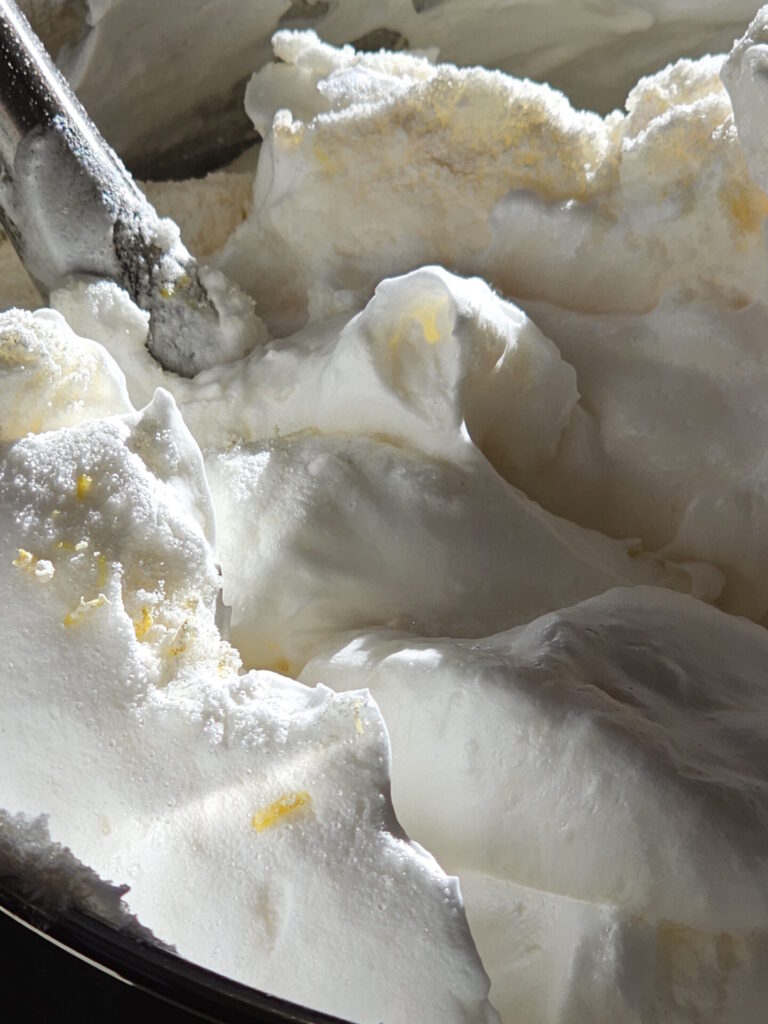
TIP: Aim for medium, soft peaks when whipping your egg whites. The peaks should hold their shape, but still gently fold over on themselves when held upright. If there’s still some liquidity to the whites, whip them a little more, but stop before they become too stiff. See notes below. - Transfer the whipped egg whites to a large mixing bowl. Sprinkle the lemon zest evenly over the top of the whites and sift 1/4 of the flour mixture over the top. Using a large spatula, gently fold the flour mixture into the egg whites, making a 1/4 turn of the bowl with each fold. After 4-5 turns, sift another 1/4 of the flour mixture over the top of the batter and continue to gently fold it into the egg whites. Repeat the process two more times for a total of four additions.
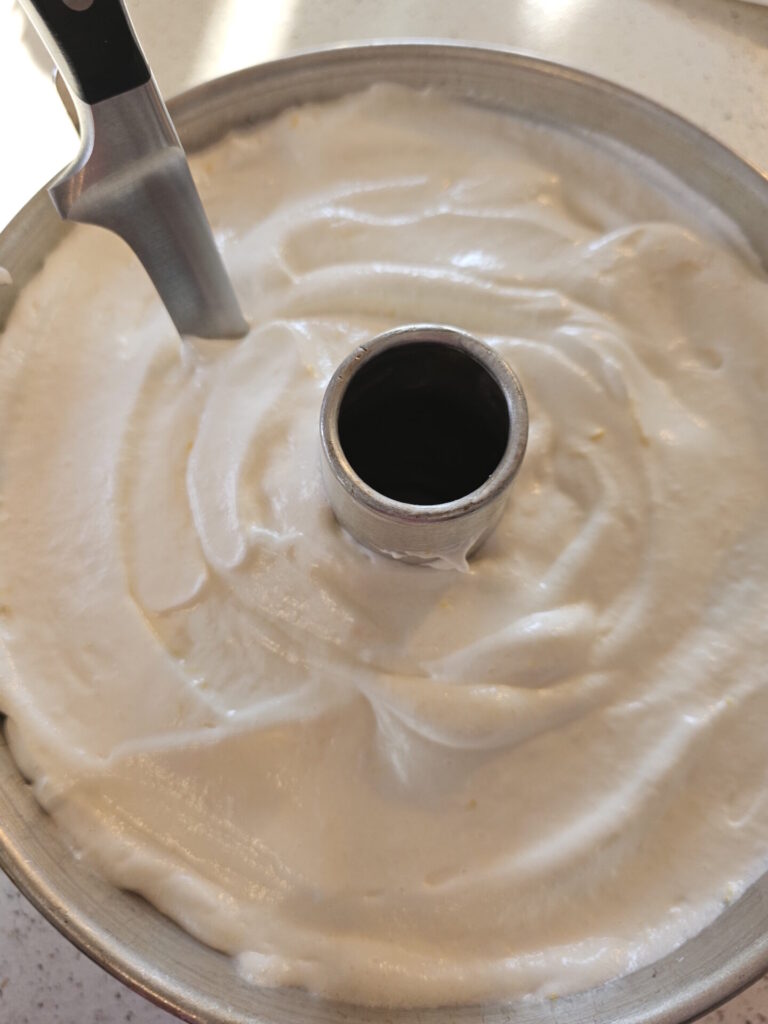
Do not over mix the batter as this will result in a loss of volume. Gently fold the batter until the flour mixture is just incorporated. - Using the spatula, gently transfer the batter into the ungreased, unlined angel food cake pan until it is evenly distributed and smooth out the surface of the cake.
- Once the pan is filled, gently pull a tall butter knife through the batter. This will ensure there are no large air pockets in the finished cake.
- Bake at 350 degrees F. for 55 – 60 minutes. The cake is ready when it is firm to the touch and an instant read thermometer registers 210 degrees F.
- When ready, remove from the oven and immediately invert the pan. Allow the cake to cool upside down for a minimum of two hours or until completely cooled.
- To remove the cake from the pan
- Using a long, off-set spatula or straight knife, gently run the knife between the rim and the edge of cake to loosen it from the sides of the pan. When the cake has come away from the sides of the pan, repeat the process along the removable base of the cake pan and the bottom of the cake.
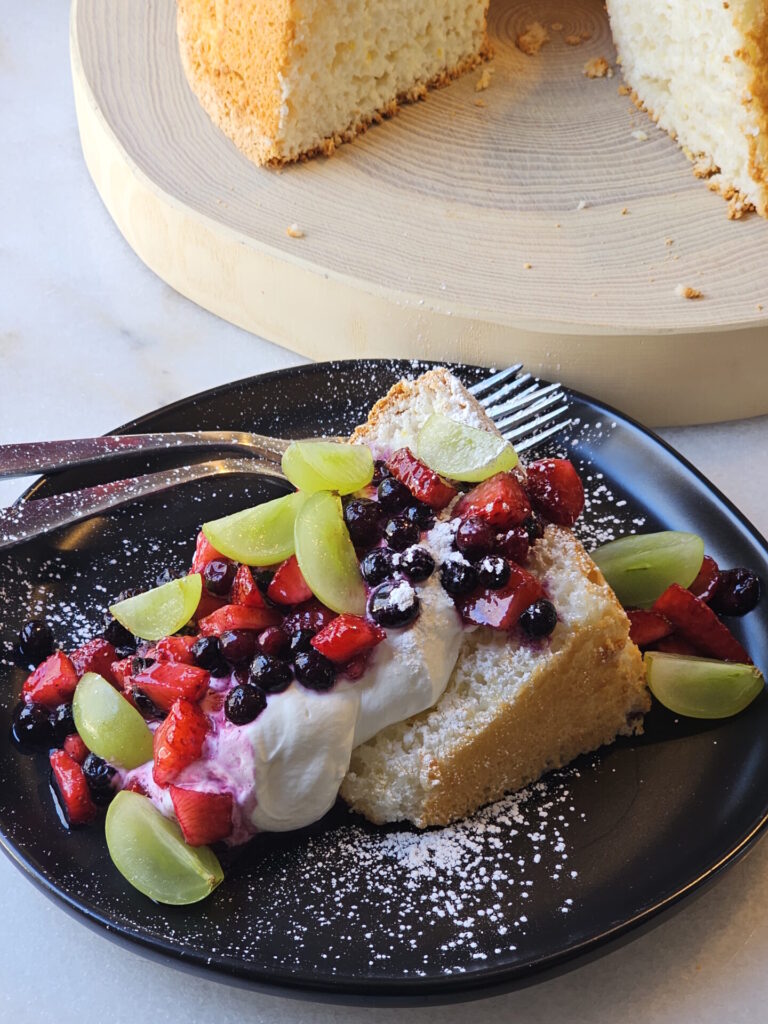
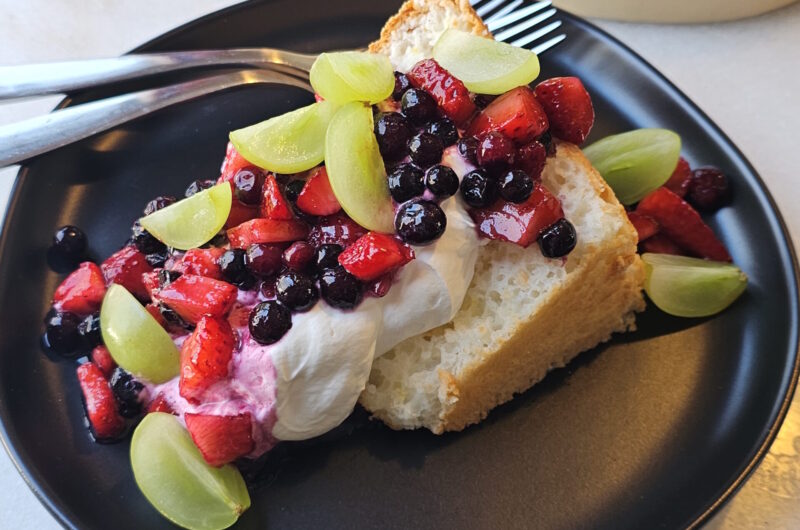
- Invert the cake onto a cake plate (the top is now the bottom of the cake and what was the bottom of the cake during baking is now the top). Serve with assorted berries and whipped cream.
Notes
- Can I use liquid egg whites for angel food cake? Yes, you can absolutely use liquid egg whites to make angel food cake. In this recipe, cream of tartar and lemon juice are used to stabilize the egg whites and help them achieve more volume.
- Why is my cake sunken in the middle? The egg whites were likely either over-whipped to stiff peaks or under-whipped and too soft. Aim for medium, soft peaks when whipping your egg whites. The peaks should hold their shape, but still gently fold over on themselves when held upright. Egg whites that are over-whipped are too stiff, won’t expand properly during the baking cycle. Likewise, under-whipped egg whites, lack sufficient air to hold their form during the baking process, so your cake may sink and remain sticky to the touch internally.